As an Amazon Associate this site earns from qualifying purchases.
Thread count at a glance
| Product | Stated Thread Count | Material | Size Shown | Pieces | Price |
|---|---|---|---|---|---|
| California Design Den Soft 100% Cotton Sateen Queen Bed Sheets Set, White | 400 | 100% long-staple cotton, single-ply, sateen | Queen | 4 | Check price on Amazon |
| California Design Den Luxury 600 Thread Count Queen Sheets Set, Bright White | 600 | 100% long-staple cotton, single-ply, sateen | Queen | 4 | Check price on Amazon |
| 800 Thread Count Queen Sheet Set, Egyptian Cotton Sheets Queen Size Bed Set | 800 | 100% Egyptian cotton, sateen | Queen | Not stated | Check price on Amazon |
| 1800 Thread Count Sheet Set – Soft Egyptian Quality Brushed Microfiber Sheets | 1800 (stated) | Brushed microfiber | Queen | 4 | Check price on Amazon |
| Elegant Comfort 1500 Premier Hotel Quality 6-Piece Damask Stripe Bed Sheet Set | 1500 (stated) | Microfiber | Queen | 6 | Check price on Amazon |
| Elegant Comfort 1500 Thread Count Wrinkle & Fade Resistant Egyptian Quality 4-Piece Bed Sheet Set | 1500 (stated) | Microfiber | Full | 4 | Check price on Amazon |
Quick answer: For 100% cotton sheets, the sweet spot is roughly 300–600 thread count — that's where you get durable, breathable fabric without paying for marketing numbers. Anything advertised above about 800 on cotton is usually counted creatively (multi-ply yarns inflate the figure), and thread count on microfiber is essentially meaningless because microfiber is measured by fiber weight, not threads per inch. The fiber, the weave, and the ply matter more than the number on the package.
Thread count is the number of threads woven into one square inch of fabric — vertical (warp) plus horizontal (weft). That's it. It says nothing about whether the cotton is long-staple or short, whether the yarn is single-ply or twisted from four flimsy plies, or whether the weave is a crisp percale or a silky sateen. A 400 thread count sheet made from single-ply long-staple cotton will outlast and out-feel a "1500 thread count" sheet made from stubby fibers spun together to game the count.
So when someone asks about the minimum thread count for good sheets: on real cotton, don't go below about 200, and be skeptical above 800. Below 200 you'll feel the weave; above 800 on cotton, you're usually paying for arithmetic.
Finding the right what is good thread count for sheets comes down to matching the features to how you will actually use it.
Notice the pattern: the cotton sets cluster at 400–800 and cost more. The four-figure numbers all belong to microfiber, where thread count is a marketing convention rather than a measurement.
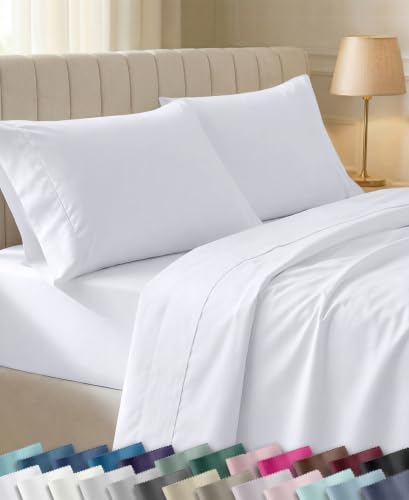
- Winner of the 2026 Good Housekeeping Best Bedding Award - Everyday Ease Cotton Sheets: Our 400 thread count queen size bed sheets are made with single-ply 100% long-staple cotton
- 4-Piece Queen Size Bed Sheets Set: Includes 1 flat sheet, 1 deep-pocket fitted sheet with all-around elastic grip (fits mattresses 8"–16"), and 2 standard/queen size pillowcases
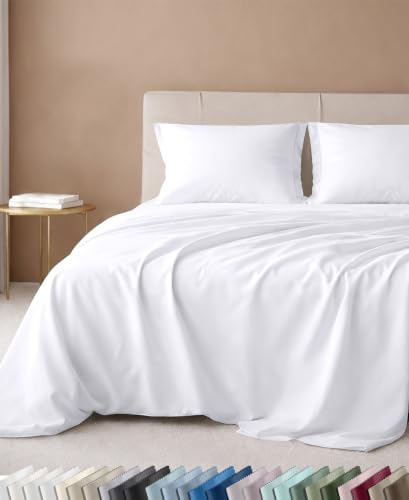
- Winner Oprah Daily Sleep Award 2026 - Restful Retreat Sateen Sheet: Our 600 thread count white queen sheets set brings a balance of comfort and refinement. Made with single-ply
- 4-Piece Queen Deep Pocket Sheet Set: Includes 1 flat sheet; 1 deep pocket fitted sheet with all-around elastic grip to fit mattresses 8 to 16” for a secure fit; 2 standard / queen
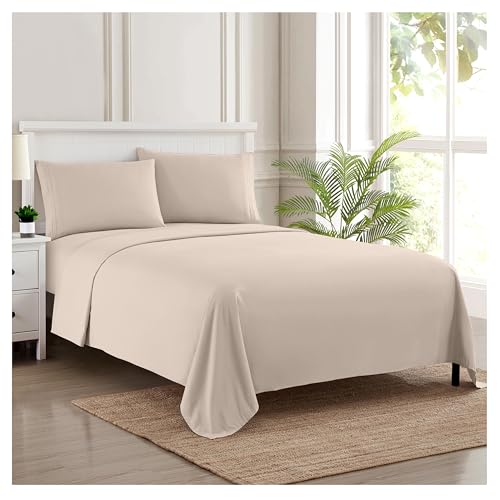
- ELASTIC CORNERS BUILT IN - What separates our bed sheets from the rest are the special elastic sheet straps built in. These elastic corners keep your fitted sheet secure to the
- LAY IN LUXURY – No more sleepless nights on uncomfortably itchy sheets! Sleep soundly on the softest 1800 Supreme Collection sheets. Be warned, though: You may never be an early
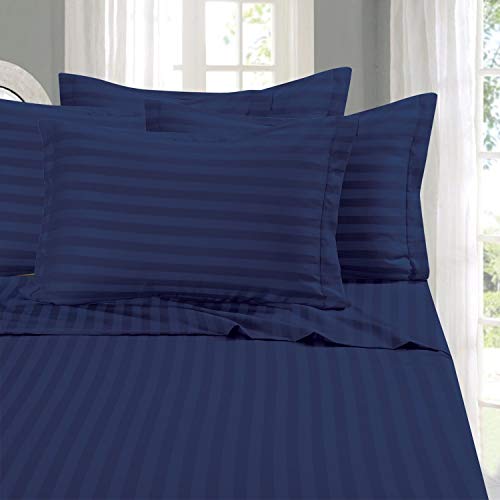
- Queen Size Luxury 6-Piece Bed Sheet Set - 1 Flat sheet (102"x90"), 1 Fitted sheet (80"x60"), 4 Standard Pillowcases (20"x30"). Deep pocket fitted sheet with elastic all around
- HIGH END: Extra Durable weave creates an everlasting softness. Discover the ultimate in high-end bedding with our silky-smooth bedding. Breathable, and cool to the touch, our
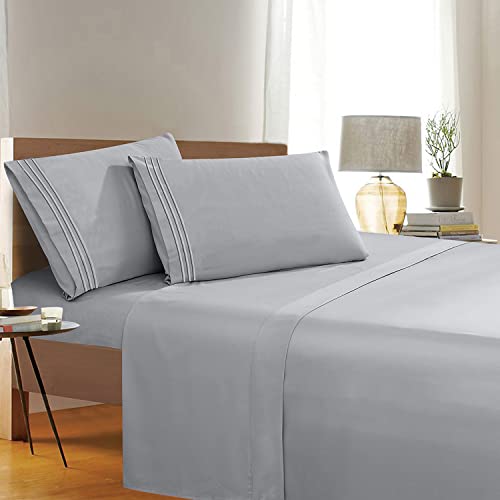
- DEEP POCKET SHEETS: Deep pocket sheets fit deep pocket 14 inch and 16 inch mattresses. These are great for using with memory foam mattress toppers or mattress pads. A stretchable
- SUPER SOFT PREMIUM MICROFIBER Hotel-quality bedding is woven from the highest quality microfiber material double brushed on both sides for ultimate softness and comfort
The honest answer: 400 cotton is the default recommendation
If you want one number, 400 thread count cotton is the answer for most people, most of the time. Is 400 thread count good for sheets? Yes — provided it's 100% cotton, single-ply, and the brand will say so.
The California Design Den Soft 100% Cotton Sateen Queen Bed Sheets Set, White is a clean example of what that looks like on a listing. It states 400 thread count, single-ply 100% long-staple cotton, a sateen weave, and — importantly — the brand states thread count is verified by independent labs within a +/- 5% variance. That last detail is worth more than 800 extra threads. The set includes a flat sheet, a deep-pocket fitted sheet with all-around elastic that the listing says fits mattresses 8"–16", and two pillowcases, with top/bottom tags to speed up bed-making. The listing also notes a 2026 Good Housekeeping Best Bedding Award and the Good Housekeeping Seal.
Go one step up and you get the California Design Den Luxury 600 Thread Count Queen Sheets Set, Bright White, same fiber story — single-ply 100% long-staple cotton, sateen weave — but with a denser hand and, per the listing, a subtle sheen. It carries an OEKO-TEX STANDARD 100 label and the Good Housekeeping Seal, plus an Oprah Daily Sleep Award 2026 mention. Same 8"–16" pocket range, same 4-piece configuration. The step from 400 to 600 costs about twelve dollars here and buys you a plusher, slightly heavier drape — not a longer lifespan.
Who a mid-range cotton set is for
- You want sheets that feel the same in year three as in month one.
- You sleep warm and want natural breathability rather than brushed synthetic.
- You care about verifiable claims: single-ply, long-staple, lab-verified counts, OEKO-TEX certification.
- Your mattress plus topper lands somewhere in the 8"–16" range, which is what these fitted sheets are built for.
Who should skip cotton and buy microfiber instead
Skip the cotton lecture entirely if:
- Budget is the binding constraint. The Elegant Comfort Best, Softest, Coziest 6-Piece Sheet Sets! - 1500 Premier Hotel Quality Luxurious Wrinkle Resistant 6-Piece Damask Stripe Bed Sheet Set, Queen Navy Blue is $19.00 and includes six pieces — a flat sheet, a fitted sheet, and four standard pillowcases — where most cotton sets give you two pillowcases for triple the price.
- You hate ironing. Microfiber is genuinely wrinkle-resistant; cotton sateen is not, and both California Design Den listings tell you to remove promptly from the dryer for a reason.
- The sheets are for a guest room, a dorm, a kid who spills things, or a rental. Spending $60 on cotton for a bed used nine nights a year is a bad trade.
- You're a cold sleeper who likes the brushed, slightly fuzzy hand of microfiber.
The trade-offs nobody puts on the box
High cotton thread count trades breathability for heft. Packing more threads into a square inch makes the fabric denser. The 800 Thread Count Queen Sheet Set, Egyptian Cotton Sheets Queen Size Bed Set listing describes exactly this: a "substantial yet weighty feel" associated with resort bedding. That's a feature if you like a hotel-heavy sheet, and a bug if you overheat. The listing does claim the natural cotton reduces heat retention compared to microfiber, and it's OEKO-TEX STANDARD 100 certified with 15-inch deep pockets — so it's the deepest-pocket option here.
Microfiber thread count numbers aren't comparable to cotton numbers. The listing for the 1800 Thread Count Sheet Set – Soft Egyptian Quality Brushed Microfiber Sheets – Luxury Bedding Set with Flat Sheet, Fitted Sheet, 2 Pillow Cases, Queen says "Egyptian Quality," not Egyptian cotton — that word "quality" is doing heavy lifting, and it's a distinction worth learning to spot across the whole category. What that set actually offers is concrete and useful: built-in elastic sheet straps at the corners, deep pockets, and fade/shrink/wrinkle resistance, at $20.70.
Price is not a thread count function. The 1800 microfiber set costs less than half the 400 cotton set. Higher number, lower price, different material. That inversion is the clearest evidence that the number isn't measuring what you think it's measuring.
Sateen versus percale matters more than 400 versus 600. Every cotton set listed here is sateen — smooth, slightly lustrous, warmer. If you want crisp and cool, you want percale, and no thread count will get you there.
What to check on the listing before you buy
Listings change constantly, so verify these yourself rather than trusting any article, including this one:
- Current price and size. Every price here was accurate at the time of writing and applies to one specific size — Queen for most of these, Full for the Elegant Comfort 4-piece silver set. Sizes are priced independently.
- Piece count by size. The 1800 Thread Count Sheet Set listing explicitly notes Twin and Twin XL include only one pillowcase. Check the fine print for your size.
- Fiber wording. "100% cotton" and "Egyptian quality" are not the same claim. Read the material line, not the headline.
- Ply and verification. Single-ply and independently verified thread count are stated on some listings and absent on others. Absence isn't proof of anything, but presence is a real signal.
- Pocket depth against your actual mattress. Measure it with a topper on. 8"–16" and 15" pockets are what's stated here; your bed may exceed both.
- Warranty and return terms. These vary by seller and change without notice — read the current terms on the page.
- Recent reviews. Go read them yourself, filtered to the most recent, and look for complaints about pilling, shrinkage, or color shifts after several washes.
800 Thread Count Queen Sheet Set, Egyptian Cotton Sheets Queen Size Bed Set — consider instead if…
…you specifically want the dense, heavy hotel-sheet feel and a genuinely deep pocket. The 800 Thread Count Queen Sheet Set, Egyptian Cotton Sheets Queen Size Bed Set is 100% Egyptian cotton with a sateen weave and 15-inch deep pockets with all-around elastic, plus head/foot indicators and marrow stitch edging. At $85.49 it's the priciest set here. It's OEKO-TEX STANDARD 100 certified. Buy it for the weight and pocket depth, not because 800 beats 600.
Elegant Comfort 1500 Thread Count Wrinkle & Fade Resistant Egyptian Quality 4-Piece Bed Sheet Set — consider instead if…
…you need a Full-size set and want low-maintenance over natural fiber. The Elegant Comfort 1500 Thread Count Wrinkle & Fade Resistant Egyptian Quality 4-Piece Bed Sheet Set Ultra Soft Luxurious Set Includes Flat Sheet, Fitted Sheet and 2 Pillowcases, Full, Classic Silver is $24.99, double-brushed microfiber, with a fully elasticized fitted sheet for mattresses up to 16 inches. The listing states it's wrinkle- and fade-resistant, cold-water washable, quick-drying, and resistant to pilling and snagging. Stated dimensions: flat 81" x 96", fitted 54" x 75", pillowcases 20" x 30".
FAQ
What's the minimum thread count for good sheets? On 100% cotton, roughly 200. Below that the weave gets loose and thin enough to feel. There's no meaningful minimum for microfiber, since the number isn't measuring the same thing.
Is 400 thread count good for sheets? Yes, if it's 100% cotton and single-ply. That combination — like the 400 thread count California Design Den sateen set — gives you softness, durability, and breathability without the density penalty of higher counts.
Why do some sheets claim 1500 or 1800 thread count? Because those are microfiber, where thread count is assigned by convention rather than counted per inch, or because multiple thin plies are counted individually. Neither approach is illegal; both make the number useless for comparison across materials.
Does higher thread count mean cooler or warmer sheets? Warmer, generally. Denser fabric traps more air. If you sleep hot, a mid-range cotton in a percale weave beats a high-count sateen every time.
Related guides
- Get a Best bedding, blankets and sleep textiles - comforters, duvet covers, sheet sets, weighted blankets, mattress toppers, bed pillows, mattress protectors, throw blankets, quilts Quote
- Best Options for Best bedding, blankets and sleep textiles - comforters, duvet covers, sheet sets, weighted blankets, mattress toppers, bed pillows, mattress protectors, throw blankets, quilts
- Best Mattress Toppers for Back Pain
Key Takeaways
- Choosing the right what is good thread count for sheets means matching the key features to your specific needs and budget
- Read real customer reviews and check the return policy before you commit
- Compare value across models — the priciest option is not always the best fit