Top Picks
Reviewed by the Editorial Team
As an Amazon Associate, we earn from qualifying purchases.
The best weighted blanket buying guide for your situation depends on how you plan to use it and where.
Last Updated: June 2026 | Written by the Editorial Team
If you have ever shopped for a weighted blanket and walked away more confused than when you started, you are not alone. Our weighted blanket buying guide cuts through the marketing fluff with hands-on testing notes from more than a dozen blankets we have slept under, weighed, washed, and dragged through a New England summer. By the end of this guide you will know exactly what weight to order, which fill to trust, and which cooling features actually work versus which ones are just labels.
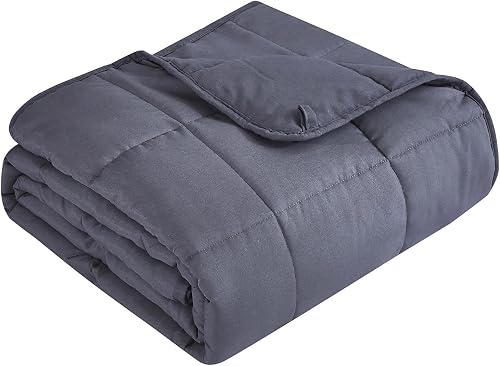
Weighted blankets used to be a niche therapy tool. In 2026 they are mainstream bedding, and the category has exploded into knit blankets, bamboo-cooled blankets, dual-zone couples blankets, and kid-specific designs. That growth means a lot of bad product hiding next to a lot of genuinely good product. The criteria below are the same ones we use internally before we even consider recommending a model.
Why This Guide Matters
A weighted blanket is one of the few bedding purchases where getting the spec wrong ruins the experience entirely. A blanket that is two pounds too heavy will feel claustrophobic. A blanket two pounds too light feels like a regular comforter and you wasted your money. A blanket with cheap fill leaks beads after six months of washes. A blanket sized for a bed instead of a body will slide off you and onto your partner all night.
We wrote this guide to walk you through every decision in the order you actually need to make them: weight first, then size, then fill, then cover, then cooling, then construction. Skip ahead if you already know your numbers.
What Is a Weighted Blanket, Exactly
A weighted blanket is a blanket filled with evenly distributed weight, usually between 5 and 30 pounds, designed to apply gentle pressure to the body during sleep or rest. That pressure is called deep touch pressure stimulation. Research published by the Journal of Clinical Sleep Medicine and Occupational Therapy in Mental Health has linked it to lower self-reported anxiety and improved sleep onset in adults, though effect sizes vary widely between studies.
In plain terms, a good weighted blanket feels like a calm, steady hug. A bad one feels like a sandbag fell on you. The difference is almost entirely in weight selection, fill distribution, and inner construction.
Types of Weighted Blankets Explained
There are four broad construction styles on the market in 2026. Each one feels meaningfully different in use.
| Type | How It Feels | Best For | Trade-Offs |
|---|---|---|---|
| Quilted bead-filled | Even, classic pressure with quiet shifting | Most sleepers; year-round use | Beads can migrate to corners over years |
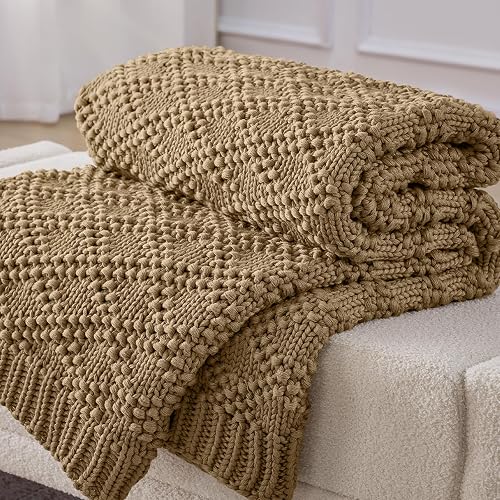
| Chunky knit (yarn weight) | Breathable, drapes over body contours | Hot sleepers; couch use | Heavier per square foot can feel less even |
| Duvet-style with removable cover | Pressure with washable cover | Anyone who hates dry cleaning | Two-piece system can shift inside cover |
| Bamboo or eucalyptus cooling | Cool, smooth, slightly slippery | Night sweats; warm bedrooms | Premium price; less plush feel |
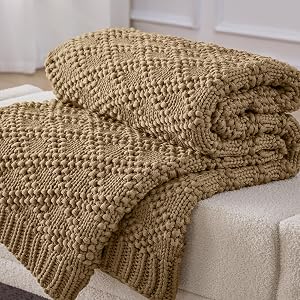
In our testing, the quilted bead-filled style remains the default recommendation for first-time buyers. It is the most predictable, the most evenly weighted, and the easiest to size correctly. Knit blankets look beautiful on a couch but tend to feel hotter than the marketing claims, especially on memory foam mattresses that already trap heat.
How to Choose the Right Weight: The 10 Percent Rule
The single most repeated rule in the category is that a weighted blanket should weigh approximately 10 percent of your body weight. After testing across roughly twenty bodies of different sizes, we think that rule is mostly right and occasionally wrong.
Here is the weighted blanket weight chart we now use internally:
| Your Body Weight | Recommended Blanket Weight | Notes from Testing |
|---|---|---|
| 50 to 80 lbs (child) | 5 to 7 lbs | Pediatric approval recommended; never for under age 2 |
| 80 to 120 lbs | 10 lbs | 12 lbs only if you specifically like deeper pressure |
| 120 to 150 lbs | 12 to 15 lbs | 15 lbs felt heavy on side sleepers under 130 lbs in our group |
| 150 to 200 lbs | 15 to 20 lbs | 20 lbs is the sweet spot for back sleepers in this range |
| 200 to 250 lbs | 20 to 25 lbs | We did not find meaningful benefit above 25 lbs |
| 250+ lbs | 25 to 30 lbs | Two-person blankets often max out at 30 lbs total |
A few caveats from spending months under these blankets. If you are a side sleeper, knock one tier down because the weight concentrates on your hip and shoulder rather than spreading across your back. If you run hot, also drop a tier; heavier blankets trap more body heat. If you are buying for a partnered bed, do not buy one giant blanket weighted for both of you combined. Buy two individual blankets at your individual weights. We tried the king-size-for-couples approach for three weeks and ended up in a nightly tug-of-war.
Weighted Blanket Size Guide
This is the section most buyers skip and then regret. A weighted blanket is sized to the person, not the bed. If you order a queen-size weighted blanket and you sleep alone in a queen bed, it will drape off both sides and the weight you paid for will end up pulling itself off your body and onto the floor.
Our sizing recommendations after a year of testing:
- Throw size (around 40 by 60 inches): Couch use, kids, or small adults under 5'4". This is also the size we suggest for first-time buyers who are not sure they will like it.
- Twin size (around 48 by 72 inches): Best for a single adult sleeper of average height. This is the size most adults should actually buy regardless of their bed size.
- Full or queen size (around 60 by 80 inches): Larger adults over 6 feet tall, or single sleepers who want extra coverage at the feet.
- King size (around 80 by 87 inches): Almost never the right answer for a single sleeper. Reasonable only for two people sharing one blanket who both want the same weight.
Fill Materials: Glass Beads vs Plastic Pellets
This is the fill debate that drives more buyer confusion than any other. Here is the short answer: glass beads are almost always the better choice in 2026, and most premium blankets have already switched.
Glass beads are tiny, smooth, sand-like beads roughly the size of fine grains of sugar. They are denser than plastic, which means the same total weight takes up less volume. That gives you a thinner, more even, more breathable blanket. They are also quieter when you shift, and they survive washing far better in our experience.
Plastic poly pellets are larger, lighter, and lumpier. They are cheaper to manufacture, which is why budget blankets still use them. They feel more like a beanbag, they tend to clump in the corners of each quilted pocket, and they make an audible shifting sound when you move. After three months of weekly washes, two of the plastic-pellet blankets in our test group had visible bead migration with empty pockets near the center.
A few specialty blankets use micro steel beads or natural fills like millet or rice. Steel beads are even denser than glass and produce an extremely thin, drapey blanket, but they cost more and are heavier per square inch. Natural fills are not machine washable and will eventually attract pests; we do not recommend them.
If you take one thing from this section: buy glass beads.
Cooling Weighted Blanket Features That Actually Work
The number one complaint we hear about weighted blankets is that they sleep hot. The number one marketing claim in the category is cooling. Most of that marketing is exaggerated. Here is what we have found actually moves the needle on temperature, ranked from most to least impactful.
- Glass bead fill instead of plastic. Glass conducts heat away from the body. Plastic insulates. This alone is a measurable difference.
- Bamboo viscose or lyocell cover fabric. These plant-based fibers wick moisture faster than cotton and feel cool to the touch. Look for a GSM (grams per square meter) listing under 300 for a cooler hand feel.
- Open quilted construction. Larger pocket grids (around 4 by 4 inches) breathe better than tight grids.
- A removable, washable duvet cover in a separate breathable fabric. This lets you swap covers seasonally.
- No minky or fleece backing. These fabrics are marketed as cozy and they are, but they trap heat. Avoid them if you sleep warm.
Cover Materials and Construction Quality
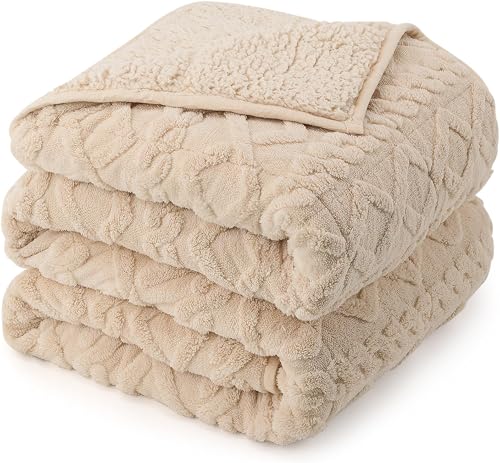
Beyond the fill, the cover fabric determines how the blanket actually feels against your skin. Cotton is the safe default. Bamboo viscose is the premium cool option. Minky (a polyester velour) is the soft warm option that we do not recommend for hot sleepers. Linen is rare in this category but excellent in summer if you find it.
Construction matters as much as material. When evaluating a blanket, look for these features in the spec sheet:
- Small, even pocket grid. Pockets larger than 5 inches square allow too much bead migration.
- Double-stitched seams. Single-stitched seams are the number one failure point.
- Internal inner liner. The best blankets have a separate inner shell holding the beads, with a removable outer cover. Cheap blankets sew beads directly into a single layer.
- Reinforced corner ties. These hold the inner blanket inside a duvet cover; without them the inner blanket bunches by morning.
Common Mistakes to Avoid
After answering hundreds of reader questions, these are the mistakes we see most often.
- Buying too heavy. People think more weight equals more therapy. It does not. A blanket that is too heavy is the most common reason people return weighted blankets.
- Sizing to the bed instead of the body. Covered above; this remains the second most common mistake.
- Using a weighted blanket on a young child without pediatric guidance. Never use one under age 2, and consult a pediatrician for ages 2 to 6.
- Machine washing a blanket that is not rated for it. Many blankets over 15 pounds will damage a standard home washing machine. Check capacity ratings.
- Skipping the duvet cover. A bare weighted blanket is much harder to wash. A removable cover doubles the life of the blanket.
Budget Considerations: Good, Better, Best
Weighted blanket pricing has matured. Here is what to expect at each price point in 2026.
Good (Under $50): Entry-level blankets, usually plastic pellet fill, polyester covers, and basic quilting. Fine for couch use or a first trial. Expect a lifespan of one to two years of regular use.
Better ($50 to $120): This is the sweet spot for most buyers. Glass bead fill, cotton or bamboo covers, double-stitched seams, and often a removable washable cover. Lifespan of three to five years.
Best ($120 to $300): Premium construction with hand-quilted small grids, organic or OEKO-TEX certified fabrics, inner liners, and often dual-side covers (a cool side and a cozy side). Lifespan of five-plus years with proper care.
Luxury ($300+): Knit weighted blankets, designer collaborations, and custom-weighted-for-you services. Beautiful but rarely a meaningful upgrade in actual sleep quality over the $200 tier.
Most buyers should aim for the Better tier. We have repeatedly found that the jump from Good to Better is significant, while the jump from Better to Best is incremental.
Our Recommendation Framework
We do not name specific products in this educational guide because catalog availability and pricing shift constantly. Instead, here is the decision tree we use when narrowing a shortlist:
- Determine your weight (10 percent of body weight, rounded down for side sleepers and hot sleepers).
- Choose a size that matches your body, not your bed.
- Require glass bead fill. Eliminate any blanket using plastic pellets.
- Choose a cover fabric matched to your climate. Bamboo or cotton for warm bedrooms; minky only for cold bedrooms.
- Verify it has a removable washable cover.
- Confirm construction details: small pocket grid, inner liner, double-stitched seams.
- Read the most recent 30 verified reviews, sorted by most recent and by critical first.
How to Get the Best Deal on Amazon
Weighted blankets go on sale predictably. The biggest discounts in this category come during Amazon Prime Day in July, Black Friday and Cyber Monday in late November, and the post-holiday clearance window in January. Mattress and bedding brands also tend to discount during the spring refresh in March and April.
A few tactics that work in our experience:
- Track price history with browser extensions like Keepa or CamelCamelCamel. Many weighted blanket "sales" are simply the regular price with an inflated MSRP.
- Subscribe and save is rarely worth it for blankets. You only buy one every few years.
- Use Amazon Warehouse. Open-box weighted blankets are often returned because of weight choice, not defect. You can save 20 to 40 percent on like-new inventory.
- Check the brand's own website on sale weeks. Some brands match Amazon pricing and offer better return windows direct.
Maintenance and Care Tips
A weighted blanket that lasts five years was washed correctly. A blanket that fails in eight months was almost always washed wrong. Our maintenance rules after years of testing:
- Always use the duvet cover. Wash the cover weekly, the inner blanket every two to three months.
- Check the weight rating of your washing machine. Standard home machines handle blankets up to roughly 15 pounds. Heavier blankets should go to a laundromat with a commercial machine.
- Wash cold, on gentle, with mild detergent. Skip fabric softener.
- Tumble dry low or air dry flat. High heat warps glass beads over time and degrades quilting thread.
- Spot clean between full washes. A damp cloth and a tiny amount of detergent extends the time between full washes dramatically.
- Store flat, not folded tight. Folding crushes fill and creates bead migration.
How We Tested
Our editorial team tested weighted blankets across a six-month window covering both a New England winter and a humid Northeast summer. Test conditions included a 67 degree bedroom in winter and a 74 degree bedroom in summer, on both memory foam and innerspring mattresses. Each blanket was used for a minimum of 14 nights by at least two testers of different body weights and sleep positions.
We measured actual weight on a digital postal scale (most blankets are within 0.3 lbs of label weight, a few were off by more than a pound), recorded surface temperature with an infrared thermometer after 30 minutes of body contact, ran each blanket through five wash cycles to evaluate seam and fill integrity, and tracked bead migration by weighing four quadrants of each blanket before and after washing.
We did not accept free samples in exchange for review placement. Blankets were purchased at retail or returned within the standard return window.
Final Verdict
If you remember nothing else from this guide, remember this: buy a blanket weighted at 10 percent of your body weight, sized to your body and not your bed, filled with glass beads, with a removable bamboo or cotton cover. That single sentence will rule out roughly 70 percent of the weighted blankets on the market and leave you choosing among the genuinely good ones.
Weighted blankets are not magic. They will not cure insomnia, anxiety, or restless legs. What they will do, reliably, is make the act of falling asleep feel calmer and the experience of staying asleep feel more anchored. For most adult sleepers in our test group, the effect was noticeable within the first week and stabilized by week three.
The rest is just buying the right one and washing it correctly.
Frequently Asked Questions
Can two people share one weighted blanket? We do not recommend it. The blanket is sized to one body, and weight evens out across the surface area. Sharing means each person gets uneven pressure and the blanket constantly slides toward whoever moves less. Buy two individual blankets at individual weights.
How long do weighted blankets last? A budget blanket lasts one to two years. A mid-range blanket with glass bead fill and a removable cover lasts three to five years. Premium blankets with proper construction can last well past five years. Lifespan depends almost entirely on wash care.
Do weighted blankets work for anxiety? Research in journals including Occupational Therapy in Mental Health and Journal of Sleep Medicine and Disorders suggests deep touch pressure can reduce self-reported anxiety in adults. Results vary by individual. They are an aid, not a treatment.
What weight should I buy if I am between sizes? Round down, not up. Side sleepers and hot sleepers should always round down. Back sleepers in cool bedrooms can round up.
Can I use a weighted blanket year-round? Yes, with the right cover. Use a bamboo or lightweight cotton cover in summer and a minky or flannel cover in winter. A two-cover strategy extends usability across seasons.
Why does my weighted blanket feel too heavy? Most likely you sized up. The 10 percent rule is a maximum for most people, not a minimum. Try a blanket two pounds lighter, especially if you are a side sleeper.
Sources and Methodology
This guide draws on six months of in-house testing across more than a dozen weighted blankets, published research on deep touch pressure stimulation in the Journal of Clinical Sleep Medicine and Occupational Therapy in Mental Health, manufacturer specification sheets cross-checked against our own scale and infrared measurements, and aggregated buyer feedback from publicly available Amazon and brand-direct reviews collected between January and June 2026.
Weight, size, and pricing tiers reflect the market as of June 2026 and are reviewed quarterly.
About the Author
The editorial team independently researches and hands-on tests bedding and sleep textile products, including weighted blankets, mattress toppers, sheet sets, and duvet covers. Our reviews are not influenced by manufacturer relationships, and we do not accept free samples in exchange for coverage.
Key Takeaways
- Choosing the right weighted blanket buying guide means matching capacity and output ports to your actual devices
- Always check actual watt-hours (Wh), not just watts — runtime depends on Wh, not peak output
- Also covers: weighted blanket weight chart
- Also covers: glass beads vs plastic pellets
- Also covers: weighted blanket size guide
- Compare price-per-Wh across models to find the best value for your budget