As an Amazon Associate this site earns from qualifying purchases.
Specification comparison
| Product | Price | Size as listed | Type / fill | Depth fit | Care | Certification / warranty |
|---|---|---|---|---|---|---|
| Niagara Sleep Solution Queen Ultra Soft Mattress Topper — Back Pain Relief | Check price on Amazon | Queen, 60x80 in | Rayon derived from bamboo top, quilted pad | Fits 8–20 in mattresses | Machine washable | No latex or formaldehyde; satisfaction promise |
| BEDLORE Queen Mattress Topper Viscose Bamboo, Thick Pillow Top Mattress Pad | Check price on Amazon | Queen | 40% bamboo viscose / 60% polyester pillow top | Deep elastic pocket (depth not stated) | Machine washable | Not stated |
| EGO 3 Inch Full Mattress Topper Gel Memory Foam for Pressure Relief | Check price on Amazon | Full | 3 in gel-infused AeroFusion memory foam, ventilated | Sits on top, under the mattress cover | Not stated | CertiPUR-US; 3-year limited warranty; no trial period |
| Niagara Sleep Solution 100% Cotton Top Cooling Mattress Topper - Queen Size | Check price on Amazon | Queen, 60x80 in | Cotton top quilted pillow-top pad | Fits 8–20 in mattresses | Machine washable | No latex or formaldehyde |
| SINWEEK 2 Inch Gel Memory Foam Mattress Topper Twin Size, Ventilated High Density Pad for Back Pain, Bed Topper with Removable Soft Cover, CertiPUR-US Certified | Check price on Amazon | Twin | 2 in ventilated high-density gel memory foam | Elastic straps, anti-slip backing | Removable cover, machine washable | CertiPUR-US foam; OEKO-TEX cover |
| SameBed Mattress Topper Queen,Extra Thick Mattress Pad Cover for Back Pain,Cooling Mattress Protector with 8-21 Inch Deep Pocket,Overfilled Down Alternative Filling | Check price on Amazon | Queen | Box-quilted 5D & 7D down alternative, 400TC microfiber | Fits 8–21 in mattresses | Machine wash cold, tumble dry low | Not stated |
Quick answer: Pick your topper by what you want it to fix. If your mattress is too firm or you wake up with pressure-point aches, memory foam in the 2–3 inch range is the usual answer; if the bed is fine but the surface feels flat or hot, a quilted pillow-top pad is cheaper, washable, and far less of a commitment. Size is simple — buy the topper that matches your mattress size, then check the deep-pocket range against how tall your mattress actually is.
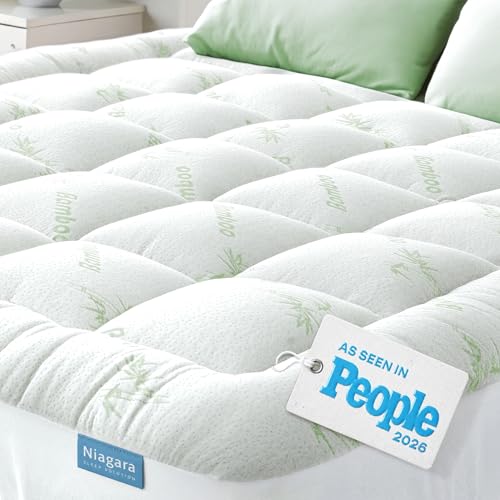
- CLOUD-LIKE SLEEP: This queen mattress topper adds an extra cushion to provide full body support. The back support mattress topper queen is also sweat-absorbent for extra comfort
- EASY TO USE: The breathable bed pad has a deep pocket, is easy to put on, and has extra-length stretchy sides for thick mattresses. The puffy mattress topper is machine-washable
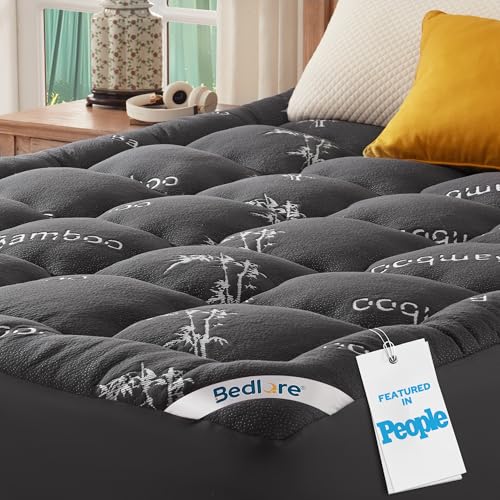
- 【Premium Quality】Experience ultimate comfort with our pillow top mattress topper queen. Crafted from premium 40% bamboo viscose material and 60% polyester
- 【Breathable Design】 Stay cool and cozy all night with the thick mattress topper queen. Ideal for sensitive sleepers, made from natural bamboo viscose
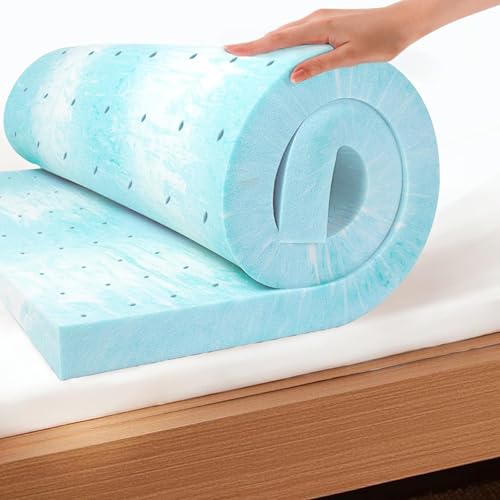
- Built for Comfort: 3 inch of AeroFusion Memory Foam is crafted to fit body's micro pressure points and conform to body's curves and shape for comfort throughout your sleep
- Cool & Breathable: Gel Memory Foam enhances temperature regulation and the ventilated holes enhance breathable property that allows heat and humidity normally trapped under covers
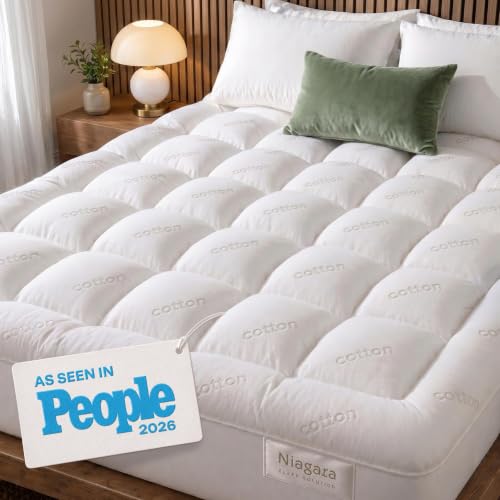
- ULTRA SOFT: The Niagara queen mattress pad is made from soft cotton on top and fits mattresses 8-20 inches deep. The mattress topper queen is gentle on sensitive skin, elastic
- ENHANCE YOUR MATTRESS: This queen size mattress pad brings 5-star hotel quality to your old mattress. The queen bed mattress pad is 60x80 in size, breathable, and comfortable
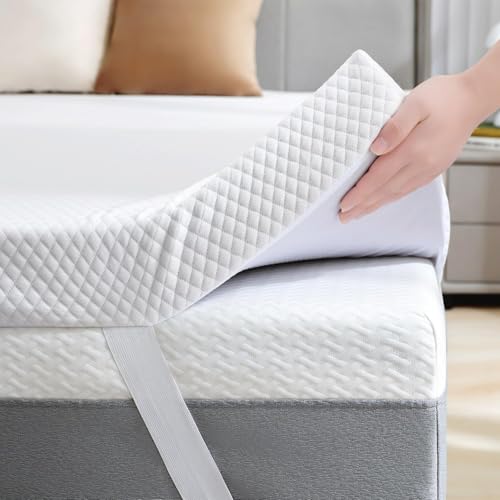
- Gel Memory Foam Material: Our memory foam mattress topper readily conforms to the curves and shape of your body, distributes weight evenly to alleviate pressure points for better
- Increase Softness and Comfort: The mattress topper not only protects your mattress and other bedding, but also extends the life of the product itself due to its high-density
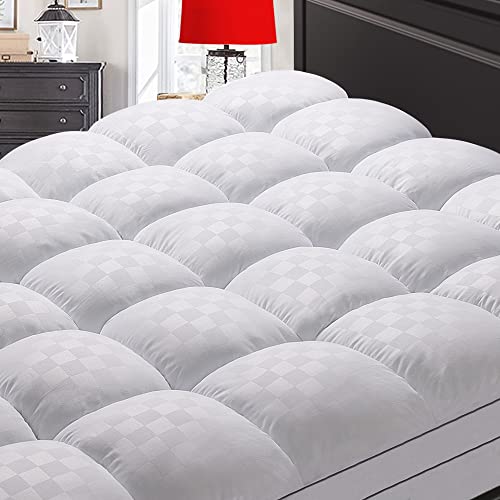
- Premium Surface Material - The mattress topper adopted microfiber fabric made, which is breathable and skin-friendly, providing you superior softness and comfort. The surface
- Box Quilted & Filling - Our mattress topper double filled with 5D & 7D snow down alternative filling, extreme soft, fluffy and warm. Unique box quilted design, which allows the
Sizing: buy your mattress size, then check the pocket
The size question is less complicated than it looks. A topper is sold in the same size names as mattresses, and a queen topper is 60x80 inches — the exact footprint of a queen mattress. Both Niagara toppers state that dimension outright. So if you sleep on a king, buy a king; the topper is not supposed to hang over or tuck under anything.
The number that actually catches people out is mattress depth. A fitted-skirt topper has to stretch over the whole mattress, and if your mattress is 16 inches tall with a pillow top, a shallow skirt will pop off the corners every night. Check the stated range: the Niagara pads list 8–20 inches, and the SameBed pad lists 8–21 inches. Measure your mattress from the seam at the bottom to the top of the quilting before you order.
The best mattress topper buying guide for your situation depends on how you plan to use it and where.
Foam toppers dodge this entirely — a slab of foam just lies on the surface. The trade-off is that it can slide, which is why the SINWEEK topper includes elastic straps and an anti-slip backing on its removable cover.
Thickness and density, in plain terms
For foam, thickness is how much of your body sinks in before you reach the mattress underneath. Two inches, like the SINWEEK topper, is enough to take the sharp edge off a firm mattress while still letting the mattress's own support come through. Three inches, like the EGO topper, is a bigger change in feel — MLILY describes it as giving you "a new and softer mattress," and that's the honest framing. Go 3 inches when the bed is genuinely too hard, not when it's slightly off.
Density is the other half. High-density foam holds its shape under weight instead of bottoming out, which is why SINWEEK calls its 2-inch pad a "high density" pad — a thinner slab of dense foam can outperform a thicker slab of soft, cheap foam. Neither of these listings publishes a density figure in pounds per cubic foot, so treat the marketing language as a description of intent, not a spec. What you can verify is safety: both foam toppers here are CertiPUR-US certified, which covers content and emissions.
Quilted pads don't have a thickness spec in the same sense. Their loft comes from fill — the SameBed pad uses 5D and 7D down alternative fill held in box-quilted compartments so it can't migrate into one corner, and BEDLORE uses a 40% bamboo viscose / 60% polyester construction.
Who a foam topper is for
Get memory foam if you have a specific pressure complaint: hip or shoulder aches on a firm mattress, a bed that's newer and supportive but punishing, or a guest room mattress you want to rescue. Gel infusion and ventilation holes — both present on the EGO topper — exist because plain memory foam traps heat, so look for them rather than treating them as bonus features.
Get a quilted pad if the mattress is basically fine and you want a softer, cooler surface you can throw in the washing machine. That's most people. It's also the right call if you're renting, sharing, or not sure yet.
Who should skip it
Skip a topper if your mattress sags in the middle. No topper fixes a broken support layer — you'll feel the dip straight through foam or fill, and you'll have spent $40 postponing a mattress purchase.
Skip 3-inch foam if you run hot and don't have a cooling setup, if you share the bed with someone who hates sinking, or if you need to be able to wash the thing. Foam is spot-clean only unless it has a removable cover.
Skip a fitted quilted pad if your mattress is over 21 inches tall or under 8 — you're outside the stated fit range on every pad here.
The honest trade-offs
Foam can't be returned once opened. MLILY states this bluntly for the EGO topper: no trial period, opened mattresses cannot be returned. You get a 3-year limited warranty for defects, which is a different thing. Buy foam knowing you're committing.
Foam needs time and air. Both foam toppers ship compressed and need 24–72 hours to expand — SINWEEK notes cold rooms take longer and suggests around 78°F. MLILY also flags a mild temporary odor that airs out. If you need a bed tonight, this is not it.
Quilted pads also need fluffing. The Niagara bamboo topper ships compressed too; the instructions are to shake it out and leave it 48 hours, or tumble dry low for 20 minutes.
"Bamboo" means rayon or viscose. Niagara says "rayon derived from bamboo"; BEDLORE says bamboo viscose. Both are accurate — it's a processed fiber, and it's genuinely soft and breathable, just not raw bamboo.
What to check on the listing before you buy
Listings change more than articles do. Before you click buy:
- Price. Every figure here was accurate at writing and will drift. Check the live number.
- Variant. This is the big one. The EGO topper is listed here as a Full and the SINWEEK as a Twin — size dropdowns change price, and it's easy to add the wrong one to cart. Confirm the size selected in the dropdown matches what you measured.
- Depth range. Re-read the pocket depth on the actual listing for your variant; skirt depth sometimes differs between sizes.
- Warranty and returns. MLILY's 3-year limited warranty on the EGO topper is stated on the listing. Others here don't state one. Read the return policy for foam specifically.
- Reviews. Skim recent reviews yourself, filtered to your size, and look for complaints about fit and expansion — those are the failure modes.
BEDLORE Queen Mattress Topper Viscose Bamboo, Thick Pillow Top Mattress Pad — consider instead if…
…you want a plush pillow-top surface and softness matters more to you than a stated depth range. The BEDLORE Queen Mattress Topper Viscose Bamboo, Thick Pillow Top Mattress Pad uses a 40% bamboo viscose / 60% polyester blend with a deep elastic pocket and elasticized skirt to stop it shifting, and it's machine washable. BEDLORE doesn't publish a depth range, so measure and check the listing.
Niagara Sleep Solution 100% Cotton Top Cooling Mattress Topper - Queen Size — consider instead if…
…you'd rather sleep on cotton than a synthetic or viscose surface. The Niagara Sleep Solution 100% Cotton Top Cooling Mattress Topper - Queen Size is 60x80 inches, fits 8–20 inch mattresses, is machine washable, and is made without latex or formaldehyde. At $34.99 it's the cheapest cotton-surface option here.
SINWEEK 2 Inch Gel Memory Foam Mattress Topper Twin Size, Ventilated High Density Pad for Back Pain, Bed Topper with Removable Soft Cover, CertiPUR-US Certified — consider instead if…
…you want foam's pressure relief but a subtler change in feel, and you want to be able to wash the cover. The SINWEEK 2 Inch Gel Memory Foam Mattress Topper Twin Size, Ventilated High Density Pad for Back Pain, Bed Topper with Removable Soft Cover, CertiPUR-US Certified pairs CertiPUR-US foam with an OEKO-TEX certified removable cover with a metal zipper, elastic straps, and anti-slip backing.
SameBed Mattress Topper Queen,Extra Thick Mattress Pad Cover for Back Pain,Cooling Mattress Protector with 8-21 Inch Deep Pocket,Overfilled Down Alternative Filling — consider instead if…
…you have an unusually tall mattress or you're on a tight budget. The SameBed Mattress Topper Queen,Extra Thick Mattress Pad Cover for Back Pain,Cooling Mattress Protector with 8-21 Inch Deep Pocket,Overfilled Down Alternative Filling fits 8–21 inch mattresses, uses box-quilted 5D and 7D down alternative fill in 400TC combed fiber, and is $29.07.
FAQ
How thick should a foam mattress topper be? Two inches for a mild softening of a firm mattress, three inches when the bed is genuinely too hard. Thicker isn't automatically better — more foam means more sink and more heat retention.
What size mattress topper should I buy for my bed? The same size as your mattress. A queen topper is 60x80 inches. The extra step is depth: measure your mattress height and confirm it falls inside the topper's stated pocket range, like the 8–20 inches on the Niagara pads or 8–21 inches on the SameBed pad.
Does a topper stop a mattress from sagging? No. A topper changes the comfort surface, not the support underneath. If there's a visible dip, replace the mattress.
How long before I can sleep on a new foam topper? Allow 24–72 hours flat in a ventilated room. SINWEEK notes cold rooms slow expansion and suggests roughly 78°F to speed it up.
Related guides
- Current Rates for Best bedding, blankets and sleep textiles - comforters, duvet covers, sheet sets, weighted blankets, mattress toppers, bed pillows, mattress protectors, throw blankets, quilts
- Coop Home Goods Original Pillow Review
- Best bedding, blankets and sleep textiles - comforters, duvet covers, sheet sets, weighted blankets, mattress toppers, bed pillows, mattress protectors, throw blankets, quilts for Seniors
Key Takeaways
- Choosing the right mattress topper buying guide means matching the key features to your specific needs and budget
- Read real customer reviews and check the return policy before you commit
- Compare value across models — the priciest option is not always the best fit